What you should do next depends entirely on which insect you are watching. Wasp nests get treated. Bumblebee nests, with rare exceptions, get left in peace to finish their short season. Honeybees belong with a beekeeper rather than a pest controller. So before anybody books anything, spend half a minute on the three checks below. All of them work from a couple of metres away.
Check one: fur
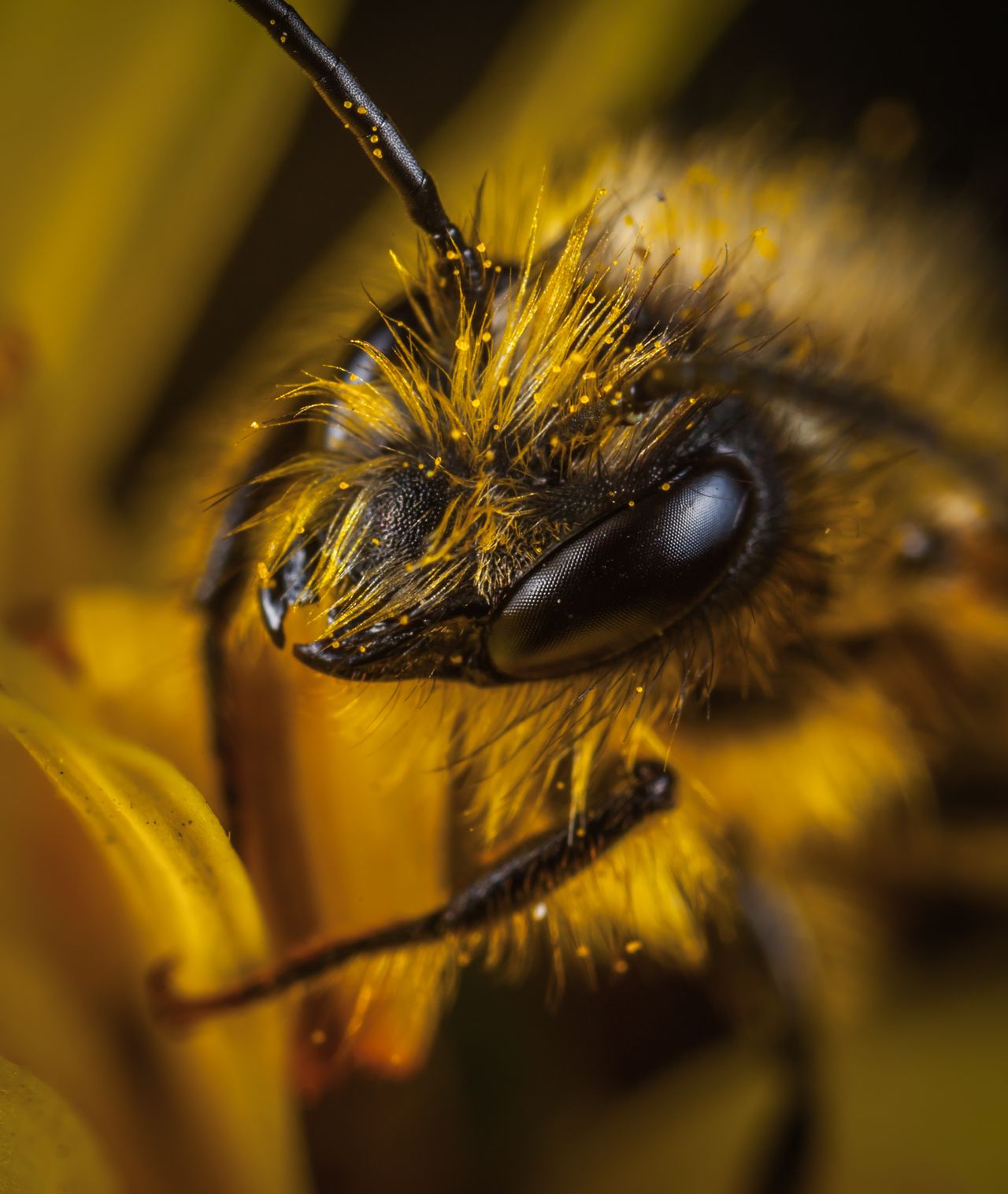
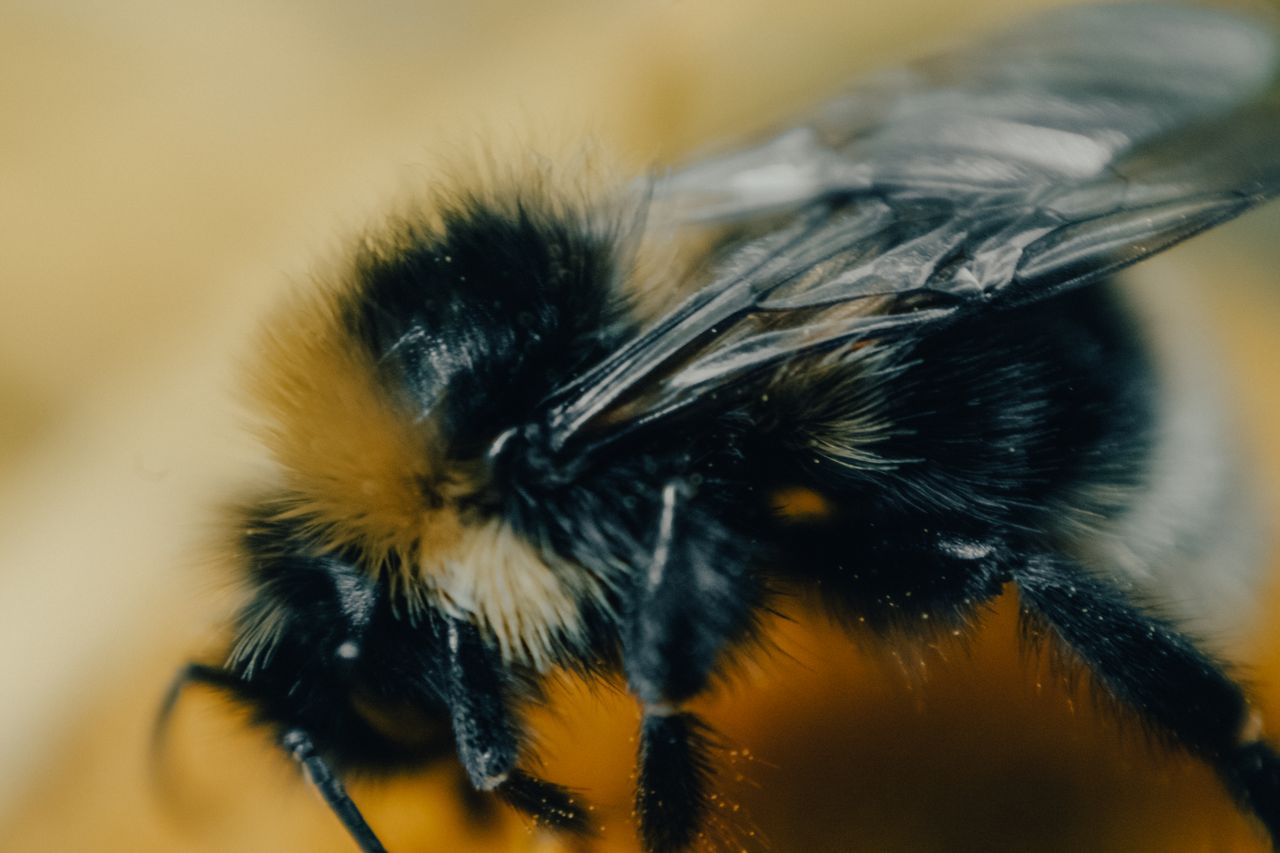
Look at the body surface. A wasp appears polished, almost plastic, with sharp yellow-and-black markings you could draw with a felt tip. Bees carry visible hair: dense and teddy-bearish on a bumblebee, shorter and browner on a honeybee. On a sunny day the difference is obvious even in flight, because a wasp glints and a bee does not.
Check two: shape
The wasp family wears its waist on show. Between the middle and rear body sections there is a visible pinch, giving the insect an angular, segmented outline. Bumblebees read as one continuous oval. Honeybees sit somewhere between, slimmer than a bumblebee but without the cinched look. Hornets keep the wasp outline and scale it up to somewhere between two and three and a half centimetres, with the yellow shifted towards brown and orange.
Check three: sound and flight
Close your eyes for a second. A bumblebee announces itself with a low, steady drone and travels in unhurried straight runs between flowers. Wasps fly quicker and jerkier, quartering back and forth, and their buzz is thinner and higher. A honeybee moves with purpose from bloom to bloom and rarely takes any interest in you or your food. The insect circling your can of pop at Platt Fields in August is a wasp, near enough every time.
The same checks in a table
| Insect | Appearance | Typical nest | Right response |
|---|---|---|---|
| Wasp | Glossy, vivid yellow and black, pinched waist, 10–17 mm | Grey paper structure in a roof, wall, shed or hole in the ground | Professional treatment, £60 |
| Bumblebee | Round, furry, banded black with yellow, orange or white, up to 25 mm | Old rodent hole, compost heap, bird box, loft edge | Leave alone in nearly all cases |
| Honeybee | Slim, lightly haired, matt amber to brown, 12–15 mm | Chimney, cavity wall, hollow tree; wax comb, long-lived colony | Beekeeper, not pest control |
| Hornet | Wasp outline at 20–35 mm, brown-orange colouring | Hollow tree or outbuilding, usually rural | Treated as a wasp nest, same fee |
Why the answer changes everything
Wasp colonies grow all summer, defend their nest in numbers and sting as often as they like, which is why a nest over a doorway or in a loft justifies treatment. Bumblebees run on a different clock: a colony seldom passes a couple of hundred insects, ignores people almost entirely, and winds itself down by early autumn whatever you do. In a typical Manchester garden the kindest and cheapest option for a bumblebee nest is patience, and our bumblebee page covers the few situations where that advice changes. Honeybees are a managed species; destroying a colony a beekeeper would happily collect helps nobody.
If you can see the nest itself
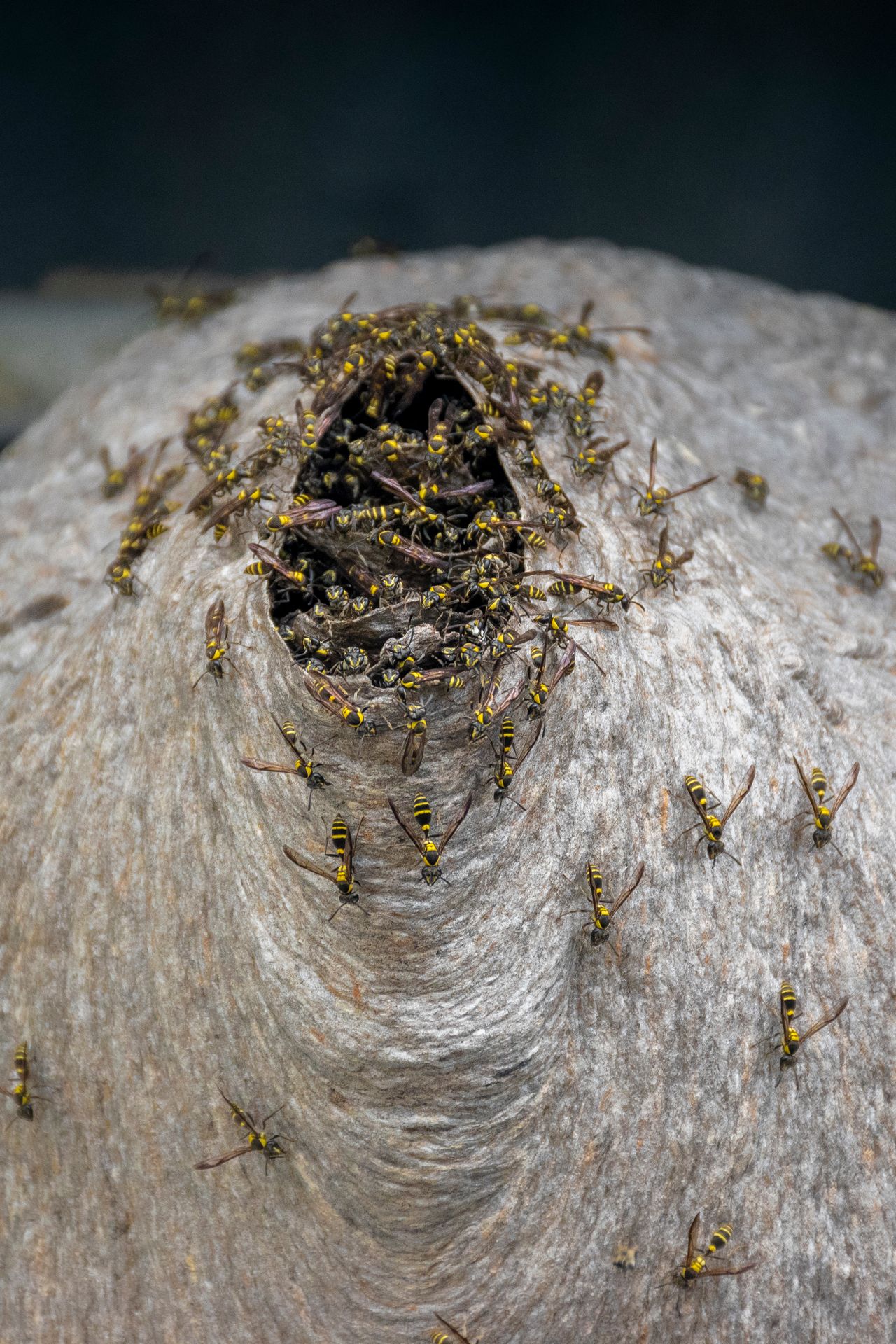
Structure settles most arguments. Wasps and hornets build in paper they make by rasping wood fibre, so their nests are dry, grey and layered, somewhere between a Chinese lantern and a papier-mâché football. Honeybee comb is waxy, yellow and hangs in parallel sheets. Bumblebees build almost nothing visible at all: from outside you see only furry insects trundling in and out of a hole. Around south Manchester we find the paper builders in terrace roof voids, shed corners and lawns, while the bird box screwed to the fence is Tree Bumblebee territory nine times out of ten.
One more lookalike: flying ants
Once or twice each summer, usually on a muggy afternoon, thousands of winged ants take to the air across Manchester at once and the phone starts ringing. No nest treatment applies here. The flight is a mating event, it finishes within hours, and the ants themselves are harmless. Bent antennae and a body in three clear beads mark them out from any wasp.
Passed the wasp test?
A wasp or hornet nest anywhere in Manchester or Greater Manchester is £60 fixed, usually treated the same day, with a free return visit if the colony survives the first.
Call to BookFrequently Asked Questions
Usually within the hour. A reasonably sharp picture of one insect, plus a second shot of wherever they are entering the building, is nearly always enough for us to name the species and say whether treatment makes sense. Send it before booking and you avoid paying for a visit a beekeeper or nobody at all should be making.
That is a honeybee swarm resting while its scouts search for a permanent home. Swarms look alarming and are actually at their most docile, since they have no nest to defend. Leave it be and contact a beekeeper through the British Beekeepers Association swarm line; most clusters move on within a day or two regardless.
Possibly, though genuine hornet jobs are scarce around Manchester. The European hornet prefers wooded, rural ground, so most 'hornet' reports we check turn out to be queen wasps in spring or Tree Bumblebees at a bird box. If you do have European hornets we treat the nest exactly as a wasp nest. A suspected Asian hornet is different: photograph it and report the sighting through the GB Non-Native Species Secretariat, because that species is invasive and monitored nationally.
Not at the same time, but the same cavity often hosts different occupants in different years. An old mouse burrow that held bumblebees last summer suits a wasp queen perfectly well the following April, which is one reason identifying this year's insect matters more than remembering last year's.