Plenty of wasps in the garden proves very little, because a worker will happily forage several streets from home. Confirming a nest on your own property means finding the colony's fingerprints: fixed traffic, sound in the building, or paper. The checks below run from the least effort to the most, and the first one settles the question in the majority of cases.
From the pavement
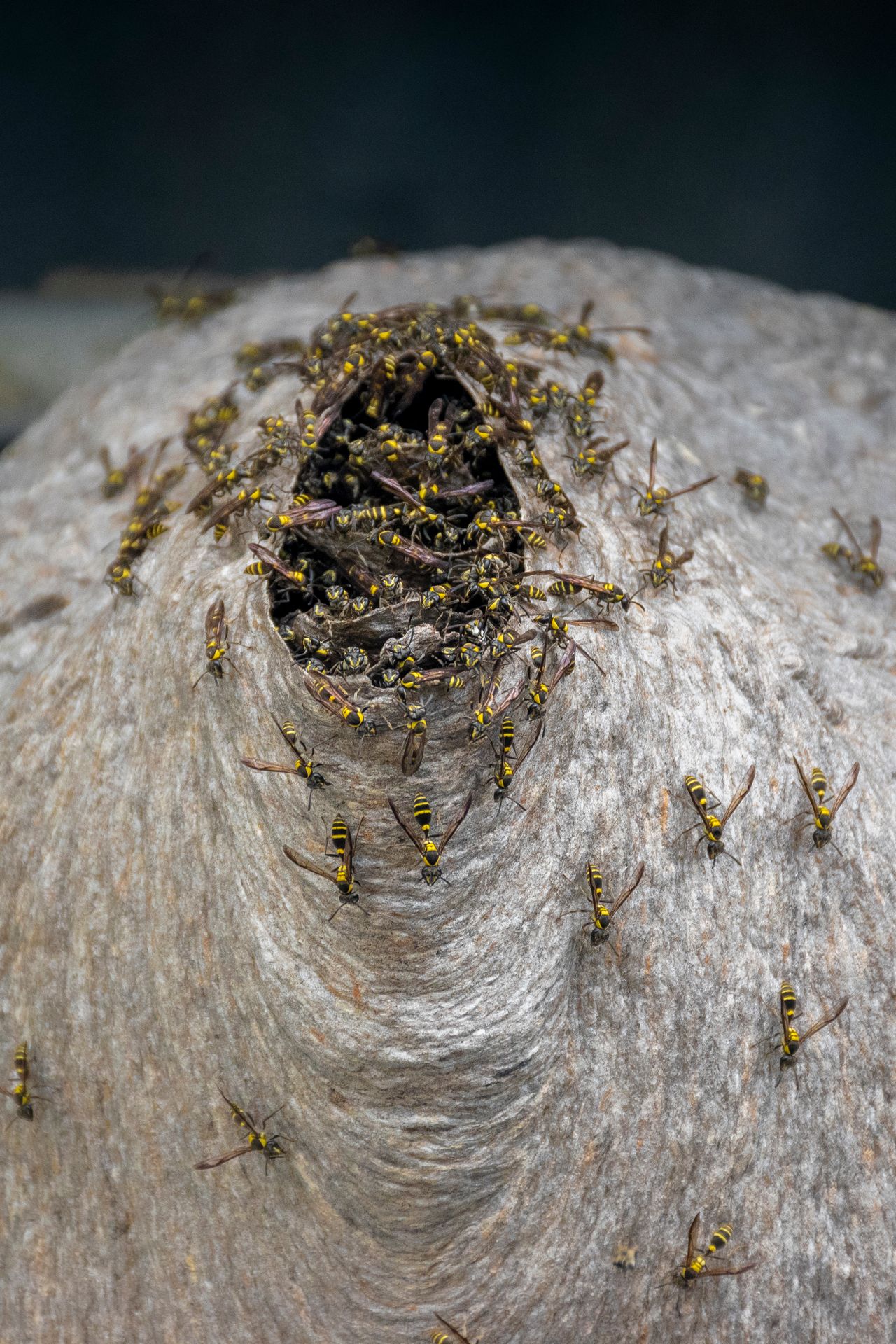
Pick a bright, still moment and study your roofline and walls for a few minutes from across the road. What gives a colony away is repetition. Individual foragers drift about aimlessly, but wasps serving a nest shuttle along the same air corridor to the same small opening over and over, like a miniature airport approach. Favourite entry points on local stock are the junction where fascia meets gutter, the underside of a soffit corner, a gap beneath the lowest course of slates, and any air brick. On the long terrace rows of Levenshulme or Fallowfield it pays to watch the neighbours' rooflines too, since a shared void means the entrance can sit two doors from the wasps in your kitchen.
From the loft hatch
Open the hatch in daylight, put your head and a torch through, and look and listen without climbing in. You are looking for a grey, layered sphere against the felt or tucked at the eaves, and listening for a soft, dry, continuous rustle, a sound often described as rain on a paper bag. Even without either, a scatter of dead or sluggish wasps on the insulation is meaningful. Do not go closer for a better view; treatment does not require anyone to reach the nest, and a boarded Manchester loft in August is no place to meet a defended colony at arm's length.
In the garden
Ground colonies announce themselves through behaviour rather than architecture. If mowing one particular strip of lawn, moving one wheelie bin or clipping one section of hedge reliably produces angry insects, a subterranean nest is the likely reason, often in a disused rodent burrow. Sheds, garages and compost bins deserve a glance through the window or door crack before you go rummaging. Gardens backing onto green corridors, the Mersey banks, the Fallowfield Loop, Moston Brook and the like, collect more than their share of these, because rough grassland next door keeps queens supplied with burrows.
Clues indoors
Three interior signs carry real weight. Wasps appearing day after day in the same upstairs room point to a colony in the roof or wall finding its way through a light fitting or pipe run. A growing collection of dead wasps on one windowsill says the same thing. Rarest and most serious is a brown damp-looking stain spreading on a ceiling, which can mean a large nest directly above; keep clear of that patch of ceiling and get the colony treated promptly.
Where Manchester nests usually sit
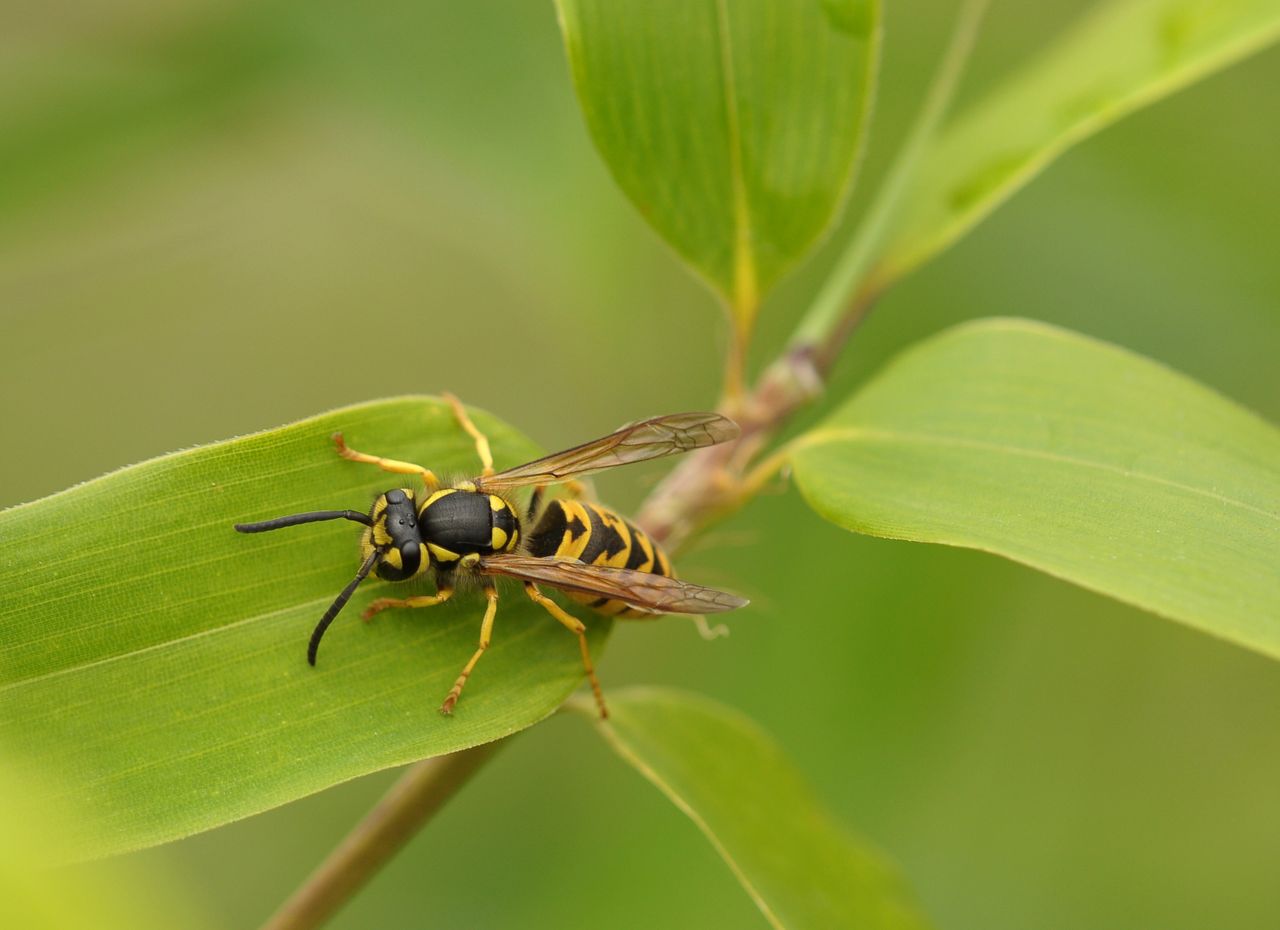
- Terrace roof voids: the continuous lofts of the Victorian rows make this the region's number-one site, with entry at a slipped slate or an opened fascia joint.
- Boxed eaves on interwar semis: the deep timber eaves of 1930s stock in places like Burnage and Prestwich hide colonies that only reveal themselves by their traffic.
- Cavity walls: reached through air bricks, weep holes and gaps around pipework, and impossible to see from outside.
- Sheds and outbuildings: a structure left shut for a few weeks in summer should be opened with a glance through the window first.
- Lawns, banks and hedges: underground and low-hung nests, commonest near parks, allotments and railway land.
- Disused chimneys: an occasional site in older houses, usually noticed as wasps in a fireplace.
While you wait for treatment
Two habits keep people out of trouble. First, leave the entrance strictly alone: no filler, no foam, no tape, because a sealed colony cuts a new exit and the new exit is frequently indoors. Second, put the DIY spray back on the shelf. An aerosol emptied at a nest entrance reaches a fraction of the colony, enrages the rest, and is responsible for a steady trickle of A&E visits every summer. Fire, for the avoidance of doubt, is worse still.
Traffic confirmed?
£60 fixed for any wasp nest across Manchester and Greater Manchester, most visits same-day, free re-treat included if anything survives.
Call to BookFrequently Asked Questions
No. Telling us which stretch of roof, wall or garden the insects keep returning to is all the information a booking needs. Tracing the entry point from the ground is part of the visit, and the fee stays the same however long that takes.
Not definitely, but in July or August it is the leading suspect. A working colony makes a faint continuous papery sound, quite unlike the stop-start scurrying of mice or the morning racket of birds under the eaves. Pair the sound with any insect traffic outside the nearest stretch of gutter and the picture is fairly conclusive.
Eventually, yes: every wasp nest is abandoned in the autumn and never reoccupied. The catch is what happens in between. Between first noticing a nest in July and its natural collapse in October, the colony multiplies several times over and grows steadily tetchier, so waiting rarely improves anything if the nest sits anywhere people need to be.
Scale it by the calendar. A colony is a lone queen in April, perhaps a tennis ball of paper with a few dozen workers by June, and by late August a structure the size of a beach ball holding thousands. The traffic you can count at the entrance is a fair proxy: a wasp every few seconds in each direction means a mature colony.
From two or three metres to one side, yes. Wasps defend the nest itself, not the airspace around their flight path, so calm observation from a sensible distance carries little risk. The things to avoid are vibration and obstruction: banging the fascia, poking the hole or standing directly in the traffic lane.